

How do you tell the difference between yellowjackets and wasps? It can be difficult, and there’s a good reason for that: Yellowjackets are a type of wasp. There are a lot of species that are classified as wasps, including yellowjackets and hornets, which share common characteristics that make it a challenge to tell them apart.
Yet it’s important to be able to do so because yellowjackets and wasps often have distinctly different temperaments and present different levels of danger. For a detailed comparison, jump down to our more in-depth explanation by clicking here.
Here’s the quick answer to telling the difference between a yellowjacket and a wasp:
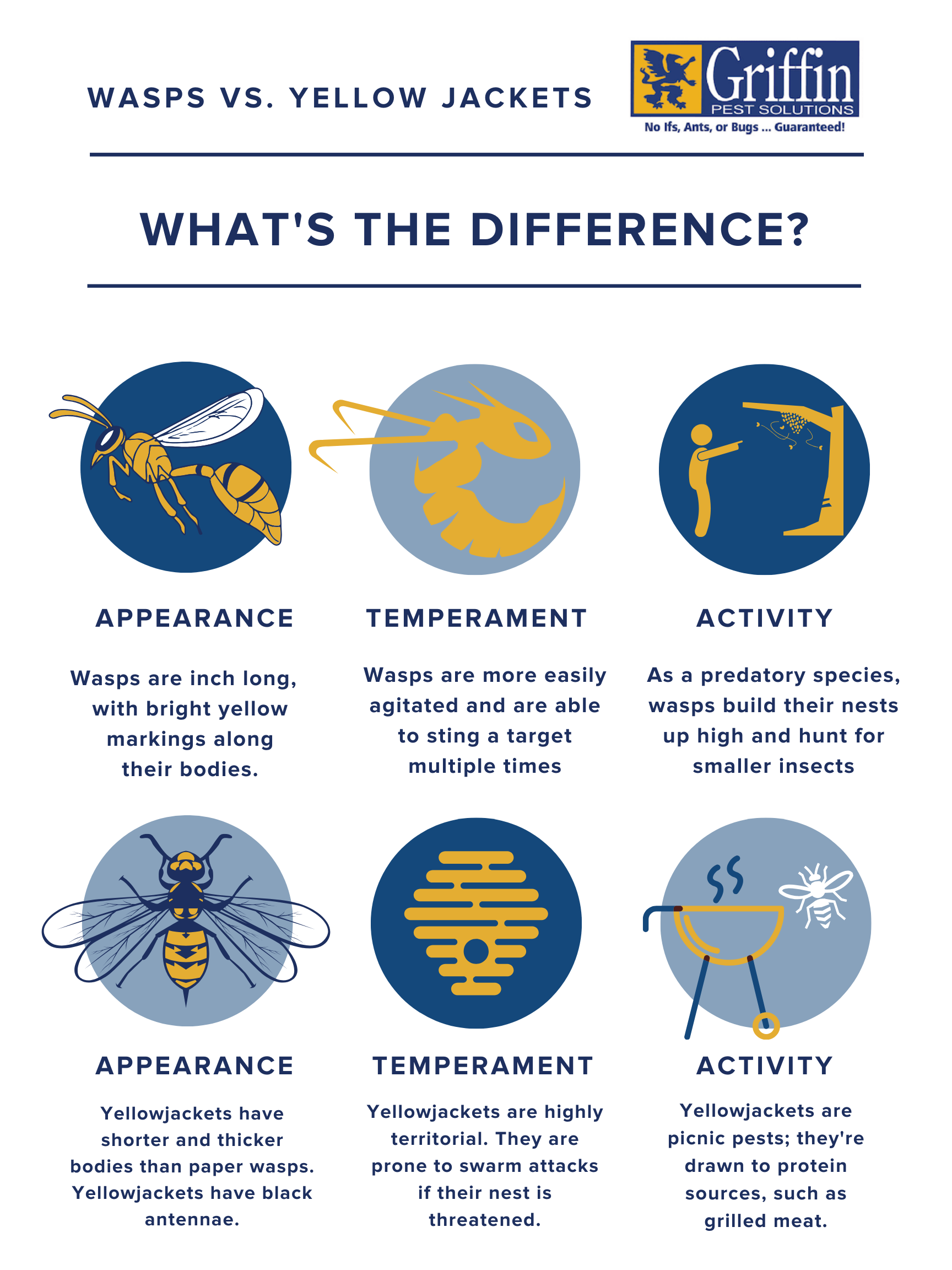
- Size and shape: Yellowjackets are slightly smaller and stockier than other types of wasps. Other wasps are more slender and have legs that dangle in flight.
- Color: Yellowjackets are bright yellow with black bands, hence their name. Other types of wasps aren’t quite as yellow and often have brownish or reddish coloring.
- Nests: Many wasps build nests that are open with visible cells. Yellowjacket nests are large and enclosed, and often hidden underground or inside walls.
- Behavior: Yellowjackets are one of the most aggressive types of wasps. They can attack with little provocation. They’re also more likely to crash your outdoor barbecue, as they enjoy the smell of meat and sugary drinks. Typically, other types of wasps are less aggressive and hunt insects. They may attack if they feel threatened.
Need Wasp & Hornet Pest Control Services?
Listen to the Differences Here
Listen and learn how to identify Yellowjackets or Wasps with an audio summary.
Differences Between Yellowjackets and Other Types of Wasps
If you have an angry-looking wasp buzzing around your yard, it can be tough to tell if it’s a yellowjacket or another kind. They tend to move quickly, and you might not have a frame of reference. Our goal here is to give you that frame of reference and equip you with the information you need to determine what your next move should be.
How to Identify Wasps in Michigan
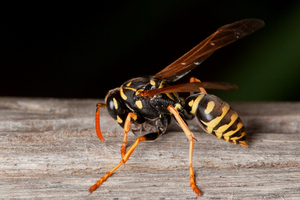
The most common wasp in Michigan is the common paper wasp (Polistes dominulus). Common and European paper wasps belong to the Polistinae subfamily of wasps. Polistinae wasps are eusocial, meaning they live together in colonies. Colonies usually consist of 20 to 75 adult wasps inhabiting a single 3 to 10-inch nest.
The term “paper” wasps refers to the paper-like appearance of Polistinae wasps’ colony nests. The wasps build nests by chewing up wood into a paper-like pulp and then molding it. Paper wasps tend to stick their nests to existing structures such as roofing overhangs or tree branches. Colonies become most active in the late summer and early fall, which is their mating season. Paper wasps are not very aggressive, but they will defend their nest from perceived threats.
How to tell it’s a wasp:
- Approximately 1” long
- Live together in colonies with about 20-75 adult wasps
- Nests are about 3 – 10” and appear on existing structures like roof overhangs or tree branches
- Most active during the late summer or early fall mating season
- Not usually aggressive, but will defend the colony when threatened
How to Identify Yellowjackets in Michigan
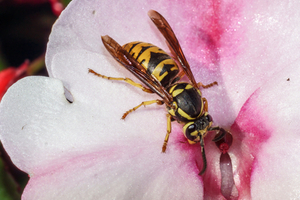
The most common yellowjackets in Michigan are the German yellowjacket (Vespula germanica), baldfaced hornet (Dolichovespula macalata), and Eastern yellowjacket (Vespula maculifrons). Yes, the baldfaced hornet is actually a yellowjacket, not a hornet (we know it’s confusing). They’re slightly smaller than paper wasps and usually measure around ½ – ¾”. They look very similar to wasps, with black bodies and yellow or white striped markings. Yellowjackets tend to look slightly more stocky than wasps.
Like paper wasps, yellowjackets are eusocial and build their nests out of reconstituted wood pulp. Yellowjacket colonies and nests tend to be much larger than paper wasp colonies, however. Some colonies could contain up to 15,000 individual yellowjackets. Consequently, their nests are much larger, as well. The predators feed on insects, but they’re also attracted to human garbage, especially if it’s sugary or protein-rich. Yellowjackets are also more aggressive than their wasp counterparts.
How to tell it’s a yellowjacket:
- Approximately ½ – ¾” long, slightly “stocky” appearance
- Large colonies can have up to 15,000 yellowjackets
- Nests can be very large, much larger than typical wasp nests
- Can be aggressive and attack if you come too close
- Attracted to garbage, as well as protein-rich and sugar-rich foods
How Can I Tell Wasps & Yellowjackets Apart?
The easiest way to tell paper wasps and yellowjackets apart is to watch their behavior. Paper wasps are relatively non-disruptive. They build their small nests onto high structures such as overhangs, roofing, chimneys, or tree branches.
Wasps focus on hunting insects, so they’ll rarely approach you. If you leave wasps alone, they’ll probably leave you alone. You may not even notice there’s a wasp’s nest near you until late summer or fall.
Yellowjackets are far more disruptive. They build their nests closer to the ground in sheltered, dark nooks and crannies. They’re also more attracted to garbage and human food than wasps. You’ll see them gathering around sugary liquids, meat, or rotting materials.
Yellowjackets range further from their nests and defend themselves more aggressively than paper wasps. Their colonies are also simply larger than paper wasp colonies. If you see a lot of wasps around your home, then those wasps are probably yellowjackets.
How Can I Keep Stinging Insects Away from My Home?
Be extremely careful about wasp or yellowjacket nests on your property. Colonies may sting you a dangerous (and painful!) number of times if they perceive you as a threat. Wasps and yellowjackets both build their nests in environments where they can easily access food and shelter. If you can keep them from getting food and shelter near you, they’ll find it somewhere else.
Wasps build nests around nooks and crannies between walls, tree hollows, branches, siding, chimneys, and gutters. Yellowjacket nests are built lower, around decks, porches, the undersides of sheds, or even bushes and trees.
- Seal up gaps and cracks whenever possible. Keep other building sites as exposed as possible.
- Tie your garbage dumpster and bins closed, and keep the garbage inside in plastic bags.
- Remove other insect infestations or problems proactively to keep wasps from finding food near you.
Of course, the best way to protect your home and family from stinging insects of all kinds, as well as other potential pest threats, is to get a professional service, including our year-round pest control program, PestFree365+.
Reliable Wasp & Yellowjacket Control Service in Michigan
If you have a wasp or yellowjacket nest on your property, give Griffin Pest Solutions a call right away.
Our experts can safely, humanely, and effectively remove the nest. We’ll also help you figure out how to keep wasps or yellowjackets from bothering you again. No matter what kind of wasp has infested your property, Griffin is your pest solution.
Back to Wasp and Hornet Control | Identifying Wasps and Hornets


