Skip to content

Poisonous Spiders in Michigan

Serving Kalamazoo | Grand Rapids | Livonia | Lansing

First things first – as one of Michigan’s leading spider control experts, it’s important to point out that spiders are technically venomous, not poisonous. But don’t worry too much about mixing those terms up. We understand what you’re talking about when you ask about poisonous spiders in Michigan.

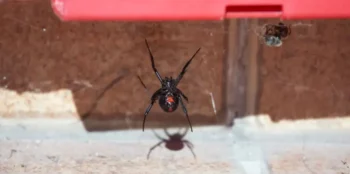
The vast majority of spiders in Michigan are harmless to humans, but that doesn’t mean all of them. If you’re looking for a quick answer, here it is. There are two venomous spiders found in Michigan: 1) the black widow and 2) the brown recluse.
Continue reading our in-depth guide to Michigan’s venomous spiders for more about black widows and brown recluse spiders, including how to identify them and how to avoid getting bitten.

Hear This Article as a Podcast

An In-Depth Look at Dangerous Spiders in Michigan

Most spiders in Michigan are harmless and rarely bite humans. The two spider species of potential concern are the brown recluse and the black widow.

Here’s what makes these two spiders dangerous:
  • Brown Recluse Spider Bite: Known for its painful and venomous bite, which can lead to tissue damage and necrosis. However, brown recluses are shy and afraid of humans. Their bites are relatively rare in Michigan. Most suspected cases turn out to be caused by a brown recluse hiding in clothing or blankets, which then get pressed against the skin.
  • Black Widow Spider Bite: Black Widow bites can be painful and may cause symptoms like muscle cramps and nausea. While they rarely result in severe medical issues for adults, they can be quite dangerous to children, the elderly, and vulnerable people.
If you suspect you’ve been bitten by a venomous spider, monitor your symptoms closely. If you experience severe symptoms, seek medical attention.

Do We Have Brown Recluse Spiders in Michigan?

Yes. The brown recluse spider (Loxosceles reclusa) is a venomous recluse spider native to the southeastern US.

Like most spiders, the brown recluse is considered very shy. They’ll go out of their way to avoid humans and would rather run away than act aggressively when confronted. Most brown recluses spend daytime hiding in dry, dark areas and hunt for food at night.

They build small, asymmetrical webs but don’t use these webs to hunt their prey. Instead, they hunt by lunging and using their venom to immobilize and kill it. Their webs are built out of sight and used as a retreat.

Brown recluse spiders are well-adapted to living indoors and will produce offspring in homes. Their eggs are off-white or tan-colored and can be found in round or cone-shaped egg sacs. Each sac can contain up to 300 eggs. A good incentive for spider control measures!

What Does A Brown Recluse Look Like?

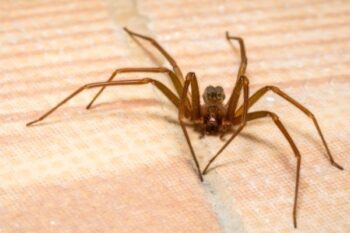
top down view of a brown recluse spider showing violin marking on back in detail

Brown recluse spiders are uniformly tan to dark brown. All adult brown recluses have a distinctive dark “violin-shaped” mark on their backs, which often prompts the nickname “violin” or “fiddleback” spider. Unlike wolf spiders and house spiders, which often get mistaken for brown recluses, their legs and torsos lack any banding, spines, or mottling.

Unlike most spiders, brown recluses have six eyes instead of eight. The eyes are arranged in pairs – one in front and one on each side of their head. The spider’s legs are long, thin, and covered with fine hairs, but not spikes.

Because of their similar appearance to many other spiders, brown recluse spider identification can be tricky. The most important thing to look for is the “violin” on the back. If you’re not sure, a pest control expert can help identify a brown recluse or any other spider species in your home.
Do We Have Black Widows in Michigan?

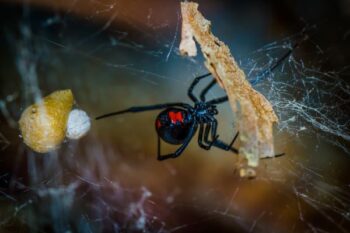
Yes. Black widow spiders are a type of spider belonging to the Latrodectus genus. There are three species of Black widow spiders in North America. The only one of these three species ever encountered in Michigan is the Northern black widow (Latrodectus variolus). 
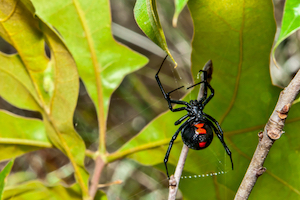
Northern black widows tend to build large, expansive webs, which they use to catch prey and tend to eggs. They build these webs in low-lying areas near where they can catch insect prey. You may find them around window wells, garages, pools, grills, or wood piles. They tend to be most active between April and October.

What Does A Black Widow Look Like?

Black widows have a highly distinctive appearance, so identification is typically quite easy. 

This spider is about 1.5” long and .25” in diameter, making it about the size of a paper clip. They are completely black – often with a “glossy” or “shiny” appearance – except for the infamous red hourglass-shaped marking on their abdomen.

Northern black widows also have a series of red spots along the middle of their abdomens. Some may possess white stripes on their abdomens.

How Can I Avoid Venomous Spider Bites?

Fortunately, the brown recluse and black widow are generally reluctant to bite unless provoked. Black widows rarely go traveling – they mostly stay near their webs – so if you keep your distance, the chances of getting bitten are low. Brown recluse spiders will wander from time to time, but they’re timid. They’ll never go out of their way to bite you.

However, taking precautions is essential, especially if you need to enter a high-risk area like the crawl space. Here are a few things you can do to prevent spider bites:

  • Shake Things Up: Before putting on clothes or shoes that have been untouched, give them a good shake to dislodge hidden spiders.
  • Inspect First: When working in crawl spaces or garages, check for spider activity before entering, and wear protective clothing.
  • Storage Safety: Be cautious when dealing with stored items like boxes or firewood. Use gloves and take care not to disturb any potential residents.
  • Keep It Clean: Regularly clean and declutter your living spaces. Spiders prefer to avoid homes that lack hiding spots and a stable food source.
  • Consider Pest Control Services: Professional pest control services can help keep spiders, including potentially venomous ones, out of your home. This is especially important in areas where such spiders are occasionally found.

Fast Pest Control Solutions for Michigan Spiders

If you have questions or concerns about spiders in Michigan and want to ensure your home or business remains spider-free, don’t hesitate to get in touch with us.

Our expert spider control services provide targeted solutions you can rely on to address your worries and maintain a safe environment.