Rainy Day Pests to Watch Out For

Rainy day pests to look out for

Rain is a welcome change of pace in spring time, especially since it helps push away the winter grey. As you might expect of any meteorological change, however, rain can also be disruptive. Spring is a already a transitional time of year. Flora and fauna are struggling to adapt to the changing season. When rain disrupts this process, it can create some awkward circumstances.

The most unwelcome of these awkward circumstances would have to be the pests. When rain disrupts their behavior, all kinds of pests may end up in places where they wouldn’t normally be. Places like your home. Here’s what to expect from pests after a long rain, why, and how to react.

Cockroaches

cockroachCockroaches need moisture and humidity to stay alive, so they’re naturally attracted to moist and humid places. The problem is, the moist and humid places where they naturally congregate also tend to be vulnerable to flooding. Millions of cockroaches live in sewers, gutters, or drain pipes. When we get heavy rainfall in the spring, these places flood. Flooding forces cockroaches out of their homes and into new places – like your home!

After periods of heavy rain, it’s common to find cockroaches in your kitchen, bathroom, or basement. These roaches are probably flooding refugees that snuck up your drains or through cracks in sills or frames. Once inside, roaches look for food, shelter, and moisture. They love to squeeze under tight hiding places like boxes and furniture, where they can hide until night time. Unfortunately, once cockroaches get inside, they’re in no hurry to leave. They’ll stick around as long as they have access to food and shelter.

Snakes

snakeSnakes tend to come out after rain for several reasons. First, most snakes naturally live close to water. When rainfall floods the banks of rivers and streams, the snakes are forced to seek higher (and drier) ground. Snakes also have to come out after rain to warm back up. As cold-blooded reptiles, snakes rely on sunlight to keep their internal body temperatures up. After days of clouds and rain, snakes get desperate to get warm.

Particularly severe rainy conditions may even force snakes into your home. As dry shelter becomes less and less available, snakes have to get creative if they want to survive. They’ll twist and contort themselves to fit through small cracks and crevices to enter basements and attics. They may even follow other pest-refugees while they’re hunting and stumble into your home inadvertently. Unlike cockroaches, snakes don’t typically stick around after the rain stops, but you might find them in your yard nearby.  

Spiders

spiderFor most pests, heavy rainfall is a nuisance. While it can be a nuisance for spiders, too, it can also be an opportunity. The busiest insect hunters in the world aren’t about to stop their grind for a little rain. After all, the itsy bitsy spider wins out in the end, even in the nursery rhyme. They go where their prey goes, no matter what. That means, when it rains, they’ll follow their prey into your home.

Spiders want to build their webs wherever they think they can catch prey. They’ll find the places where other pests get into your home – window sills, baseboard cracks, etc. – and set up shop there. Often times, spiders already living nearby during rain will move inside to follow prospective prey. Other times, their homes will get wiped out by flooding, just like their prey. Either way, expect to see more spider activity when it rains.

Termites

TermitesEveryone knows termites eat wood. What fewer people know is, ironically, termites are more attracted to moisture than they are to wood. When you think about it, it makes sense: eating wood has to be thirsty work. Termites need moisture to survive, just like everything else. If they get too dried out while they’re munching away at wood, they’ll die. Termites prefer to strike at wet food, so they can keep hydrated while they work.

Obviously, all wood is wet when it’s getting rained on. During rainy periods, termites may seize the opportunity to attack wood sources that are normally dry. The wetter the wood, the easier it is for termites to chew through it. Rain is a great deal for termites–as long as they can survive it. Just like other pests, termites can easily drown in flooding. They may also target wood that lets them avoid this danger.


We know this is probably kind of a bummer. You were just looking forward to being done with winter, and now you have all this to worry about? Maybe April really is the cruelest month! Well, the good new is you don’t have to deal with it alone.

Give Griffin Pest Solutions a call any time you’re worried about a pest infestation. We can make sure your home stay pest-proof this spring and beyond. Rain or shine, Griffin has your back.

The Most Common Pest Problems in Michigan

The Most Common Pest Infestations in Michigan

Every human-populated region on earth deals with its own host of pest problems, and Michigan is no exception. Many of the same features that make Michigan so great–our forests, our interconnected metro areas, our proximity to water–also bring pests from far and wide. Some of these pests comprise a serious, long-lasting threat to the health of the local ecosystem. Some are just out to ruin your day.

We’ve talked at length about the first variety before, so now we’re covering the problems a bit closer to home. These are the four varieties of pest that you’re most likely to encounter in your home. Chances are, you’ve dealt with at least one of these ne’er-do-wells before–even if you didn’t realize it. Here are the Michigan pest “usual suspects”, and how to keep them from bothering you.

Stink bugs
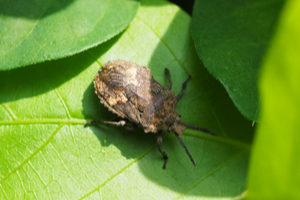
stink bugThe brown marmorated stink bug is Michigan’s newest nemesis, but it’s more-than made up for lost time. The stinky pests are mostly a problem for farmers, since they’re notorious for eating crops. They really only bother households during the fall and spring, when they’re either looking to get warm or trying to get back outside. Even if they infest homes, they don’t reproduce indoors, inflict property damage, or eat human food or fabrics. If you’ve never had them before, you’d be forgiven for thinking stink bugs don’t sound like “pests” at all!

Then you remember what they’re called. When crushed, threatened, or congregated, stink bugs secrete a gross-smelling liquid from specialized glands. The more of it there is, the stronger the smell. Stink bugs often congregate around sunny perches by the hundreds. The best way to deal with stink bugs is by vacuuming them up and throwing out the vacuum bag. Afterward, wipe down surfaces stink bugs walked over to remove the scent and pheromones they may have left behind.

Rodents
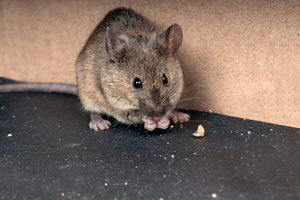
rodentsAdmittedly, mice and rats aren’t just the among the most common of pests in Michigan. Anywhere people live, chances are mice and rats are scampering around trying to live alongside them. They’ve been at it long enough, in fact, that rodents have evolved into the ultimate human-home infiltrators. Mice and rats use their sense of smell and amazing ability to sense minute air currents to find ways into homes. They don’t need to find much either; mice and rats can squeeze through unbelievably tiny openings.

Mice and rats may live in your home all year, but they’re particularly prevalent in early to mid fall. As soon as they sense the season begin to change, they’ll start looking for a warm shelter. Rodents use small openings around foundations, utility lines, or window and door frames to get into homes. Finding cracks and gaps like these and sealing them up is the best way to prevent future rodent problems today.

Carpenter ants

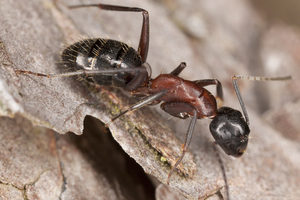
carpenter antsDespite being equally prevalent, carpenter ants are often mistaken for their cousins the sugar, pavement, or field ants. Unfortunately, though carpenter ants may look like their less-distressing cousins, they don’t behave like them at all. Most ants may be content to pursue your home’s food, but carpenter ants have another prize in mind: your home itself. Specifically, the wood your home is made of. Carpenter ants are second only to termites in terms of their wood-destroying, property-damaging potential.

Unlike termites, carpenter ants don’t eat the wood they destroy. Instead, they simply tunnel through it to build their ever-expanding colonies. The ants infest wood that’s moist and easy to bore through, so the best way to prevent them is moisture control. Ensure your plumbing isn’t leaking and your attic, basement, and crawl spaces aren’t too humid. Dispose of any water-damaged wood as soon as you find it, so that carpenter ants won’t.

Bed bugs
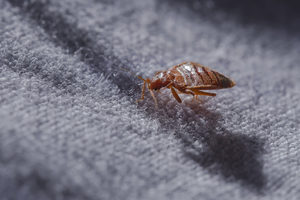
bed bugsAs we’ve explained before, everyone’s least-favorite bedfellows have had quite the renaissance in recent years. After developing resistances to the chemicals used to kill them, bed bugs began repopulating at a startling rate. Even worse, the bed bugs’ natural inclination to hide in cramped, dark, and warm places means they are nature’s ultimate hitchhiker. Before we knew what hit us, Americans had transported bed bugs all over the country by plane, train, and automobile. Unfortunately, Michigan wasn’t spared even a little.

Contrary to name and reputation, bed bugs don’t just infest beds. Instead, they gravitate toward any location that’s dark, sheltered, cramped, warm, and near food. It just so happens that beds tend to satisfy those requirements–you’re the food! Find bed bugs by looking for bloody or dark patches on sheets and linens. Prevent them by changing and washing your sheets frequently, and by thoroughly inspecting luggage you bring into your home.

We realize it can’t be comforting knowing that your home state plays host to such a rogue’s gallery. That’s why we’ve decided to end on a bit of good news. Griffin Pest Control has been fighting these common pests right here in Michigan since 1929. As you might suspect, all that practice has made us pretty darn good at it.

Next time you need help clearing out an infestation, or making sure you never get one, give Griffin a call today. We’ve helped thousands of Michigan residents before, and we’re always happy to help you too.

What Are Those Bugs in Your Basement?

Bugs in your basement

Bugs LOVE a basement. They’re dark, quiet, warm, and usually pretty humid to boot. If you have a bug infestation in your home, chances are they’re hanging out downstairs. Basements are a little spooky even under better circumstances, so we’re guessing you’re not terribly pleased to hear this.

There’s more bad news. Some bugs like basements more than others. The ones that really like basements are some of the freakiest-looking bugs around. Before you burn your house down, however, consider: these bugs are mostly terrifying because you don’t understand them. They aren’t the most dangerous pests in Michigan, or the scariest, or even the most stubborn. They’re just the freakiest ones that are here. This is everything you need to know about the monsters in your basement. The more you know, the less afraid you’ll be (we hope).

Earwigs

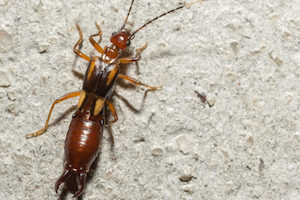
earwigWe’ll grant you: earwigs look like they crawled directly out of a nightmare. They’re about two inches long, with dark brown, reddish bodies, creepy light orange extremities… and GIANT PINCERS ON THEIR BACKSIDES. Earwigs are actually harmless to humans (and definitely don’t crawl into people’s ears) but… yeah, we get why you’d want to give them a wide berth. These insects love basements because they’re attracted to darkness and humidity. They feed on decaying plant material and sometimes hunt other insects.

Earwigs can’t fly or climb very well, so if they entered your home, they did it from the ground level. They usually find cracks near window wells and frames, or cracks in the foundation of the home. Earwigs often end up behind wallpaper or crammed into basement insulation after they sneak through low gaps. If you have earwigs in your home, it’s probably because your basement has a humidity problem. Consider investing in a dehumidifier and look for leaks.  

Silverfish

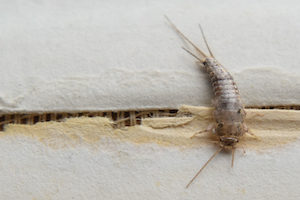
silverfishSilverfish are those tiny, silver-grey insects that really look more like shrimp than fish or bugs. Their long, thin bodies wiggle back and forth when they crawl, making it look like they’re swimming. “Silver” because of the color. “Fish” because of what they look like. Like earwigs, silverfish love moisture. They’re also attracted to warm and dark places where they can move around without being bothered. Silverfish are nocturnal, so chances are you’ll only see them at night.
Silverfish eat the starch naturally found in materials like paper, cotton, glue, carpeting, and other common household materials. They may also destroy clothing. Silverfish make use of their tiny size and thinness to get into homes. Usually, they sneak through narrow gaps in baseboards or flooring. They may even live inside walls if they can find a wide enough pathway. Humidity control is important for controlling silverfish, as is temperature control. Silverfish need temperatures of over 60℉ to breed.

Pillbugs

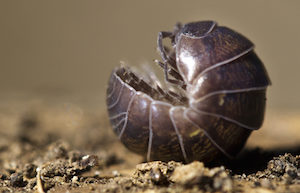
pillbugPillbugs are very small, black bugs that are about as wide as they are long. Their backs are made up of seven overlapping, segmented plates that look hard and shiny, like a beetle’s shell. Pillbugs roll into a ball to protect themselves when threatened. These “bugs” (they’re actually related to crabs!) are a common sight in gardens. They consume decaying vegetable matter beneath the top layer of soil. Most pillbugs live bury themselves several inches under soil, because they’re very temperature sensitive.
Pillbugs can’t climb sheer surfaces, so they only enter basements via the ground level of the home. Usually, they’ll find gaps under the soil, around baseboards, foundations, or siding. Once inside, pillbugs generally cover themselves by hiding under furniture, boxes, or other clutter. Pillbugs can only survive in a basement if they have a source of moisture. Check for plumbing leaks, condensation, or puddling, especially around corners and the bottom of the wall.

House Centipedes

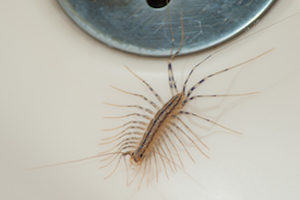
house centipedeIf basement pests are monsters, then you probably think of this guy as the “big bad”. House centipedes are inch long, tan-yellow bugs with very long longs. Those legs enable the bug to move very quickly, often in a rapid, darting motion. House centipedes are nocturnal predators that use their speed and venom-injecting claws to hunt other insects. These centipedes are capable of using these claws to “sting” humans too. The venom injected isn’t serious, but it hurts like a bee sting would.

House centipedes commonly follow their prey into homes through gaps near windows or cracks in the flooring or siding. Once they’re inside, they spend their days hiding and their nights hunting. Like most of the pests on this list, house centipedes love moist environments. Check for leaks and puddles in your basement, and consider a dehumidifier. Patching gaps may help with the humidity problem and deprive bugs of their access points at the same time.


We hope this blog helps you feel less afraid of venturing into the dark abyss that is your basement at night. Even if it doesn’t, however, at least now you can take action? Remember: your basement is your turf, not those bug’s. Even if house centipedes are just about the scariest things ever.

If you ever decide you need a little help with your basement monster slaying, feel free to call Griffin Pest Control anytime. We’re always happy to lend you our sword.

How Can I Tell If I Have a Pest Infestation?

Signs You Have a Pest Infestation

Every pest infestation leaves behind some sign of the pest’s presence. Look for grime or other buildups on walls, smeared droppings, or bite damage on fabric and paper. See if you can smell strange odors in your basement, attic, or crawlspace. Check pest-prone areas consistently to look for changes.

If you can learn to identify pest infestations quickly, you can take action to remove them sooner. The sooner you can remove pest infestations, the lower the chance that they’ll do permanent damage… or spread. If you’re worried you have a pest infestation, look for any of the following four signs. The sooner you find evidence like this, the sooner you can take the next steps:

Old wall with smudged buildup in the lower corner - Signs you have a pest infestation

Grimy Buildup

Whatever pest infestation you have, they’re making a mess somewhere. Bugs, rodents, spiders, and beetles all prefer dark, enclosed, humid places, so start your search in the basement or attic. Look high-and-low, in corners, under furniture, along the edges of the walls, and near window frames. You might find grease stains, crumbs or other food remains, dirt smudges or even discarded hair.

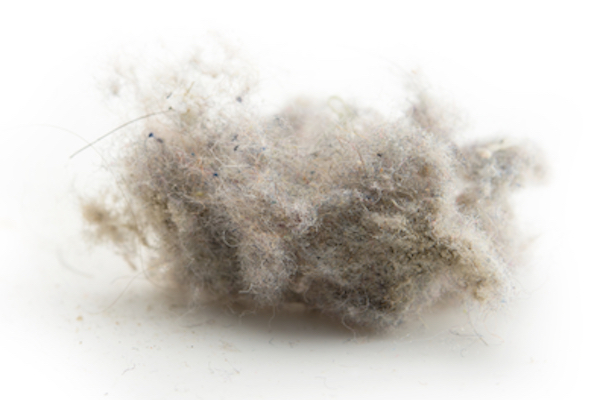
Rodents, in particular, tend to familiarize themselves with set routes and then stick to them, so look for trails of grease or grime where their bodies may have rubbed off against the walls. If your floors or sills are dusty, look for trails left behind by pests moving around. Early signs like these are often subtle, so look closely, be patient, and believe yourself. It’s always better to be safe than sorry.

Clump of rat hair - signs you have a pest infestation

Droppings

It turns outs pests don’t practice great hygiene. There’s a reason they’re called “pests”, after all, and it isn’t because they’re fun to have around. Pests leave behind their waste just like everything else. Look for small droppings around the same pest-attractive areas you search for less conclusive evidence.

The type of dropping you may find will help you determine the kind of infestation you have. Rodent droppings are spindly or conical and solid. They’ll be small and may not look or smell like much of anything. Insect droppings are even smaller, but may also include shed or discarded skin, wings, or body parts. It’s tough to be a bug. Obviously, spiders make webs to catch prey. They tend to know their stuff when it comes to pest-catching, so anywhere you find webs, look for ways other pests may be getting in nearby.

Woman wearing clothes pin on her nose so she won't have to smell - signs you have a pest infestation

Smells

Pests can produce a wide variety of smells, and pretty much all of them are unpleasant. All kinds of pests, including ants, beetles, rodents, or other bugs often carry off food to enjoy in a secluded place. The problem is, sometimes they don’t finish their meal and it begins to rot. If you smell rotting food and you can’t find it, it could be that a pest carried a piece of fruit into your walls.

Pests may also bite through food packaging in an attempt to get at its contents, breaking an airtight seal and exposing perishable foods. If you smell particularly foul odors, it’s possible that your pests are dying in their hiding places or walls and then rotting. Of course, their droppings often smell, too. If you’ve got a strange scent in your house that you can’t quite place, and it’s definitely not pleasant, an infestation could be the problem.

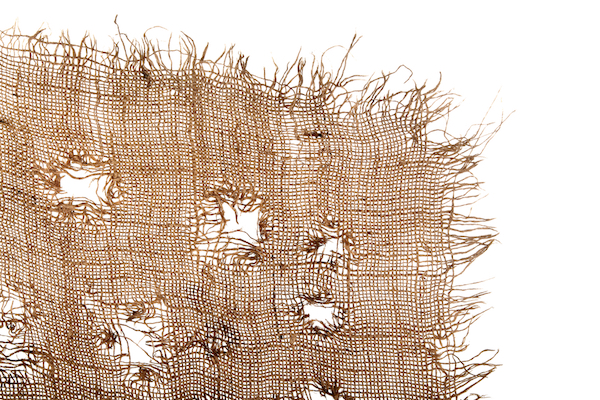
Torn fabric - signs you have a pest infestation

Fabric Damage

Unfortunately, moths aren’t the only pests who damage fabric and clothing. Different kinds of beetles, ants, rodents and bugs also feed on or at least chew through vulnerable fabric. Look for small holes or tears on clothing, drapes, carpeting, furniture, and any other fabric-based stuff you may have. It may not seem particularly appealing to us, but pests don’t mind the taste of underwear one bit.

When we say “fabric damage,” we don’t just mean bite marks, either. Like anything else they’re around, pests can make fabric dirty. Look for smudges of dirt, grease, grime, or droppings on your fabric. These dirty patches may be very small, but they could get big too. Look at freshly washed and dried clothing especially. See if your fresh laundry gets dirty or damaged before you even have a chance to wear it.


If you find any of these four signs during your inspection, give us a call. We’ll use the info you helpfully provide to figure exactly what kinds of pest infestation you’re dealing with, where they’re coming from, and how we can keep them out. We know we can take care of your problem quickly and effectively, because we’ve done it countless times before. Happy hunting!