4 Ways to Keep Squirrels Off Your Bird Feeder

4 Ways to Keep Squirrels Away from Your Feeder

Squirrels are always rather mercenary when it comes to getting food, but fall is when they become relentless. Nobody knows this better than the innocent bird lover. You’re thinking about taking your feeder down for the year, but a few feathered friends still rely on it. So, your bird feeder remains, perched against the fall like a bird seed-based symbol of defiance. Then… the squirrels come.

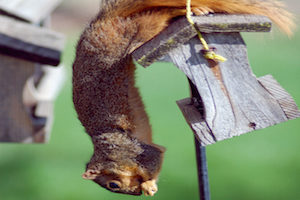
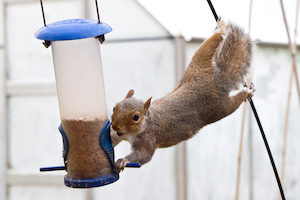
These rodential rascals stop at nothing to deprive your birds of the meal that’s meant for them. They’ll hang upside down, perform death-defying acrobatics, and get shockingly aggressive, all in the name of a little seed. They seem unstoppable. They’re not. You just need to get even more creative than they are. Here are four ideas to help you get started.

Baffle Them
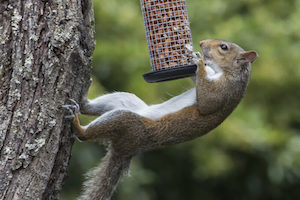
baffles may help keep squirrels away... as long as they're big enoughYou can find a bowl-like contraption called a squirrel bafflefor sale at most hardware stores. They’re designed to, well, baffle squirrels. Baffles are made of plastic or metal and hang near the bird feeder. If your feeder hangs from a tree, then the baffle attaches above the feeder. If your feeder rests on a pole sticking out of the ground, then the baffle goes beneath the feeder on the pole.

Place the “bowl” upside down, so that the concave opening points down. When squirrels try to climb on the baffle, they won’t be able to find purchase. Instead of getting at your feeder, they’ll slide off the plastic slope and fall off. Don’t worry–squirrels are master acrobats, so a little fall won’t hurt them. It is pretty funny to watch, though. Baffles are cheap and relatively easy to make. Make sure your homemade baffle is wide enough that squirrels can’t stretch around it. If they can, you know they will…

Diversion
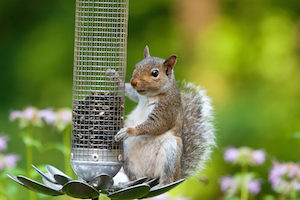
distract your squirrels with a different source of foodBased on the gusto they exhibit in the act, it’s easy to assume squirrels enjoy their feats of robbery. Believe it or not, however, that’s not the case. Squirrels go to great lengths to get at your feeder for one reason: they’re opportunists. When temperatures start to drop, squirrels get desperate to fatten up for winter. They need the food, and they’ve got the skills, so why not stage their high-flying heists on your feeder?

But what if they didn’t need to? Squirrels are all about the path of least resistance. If you were to, say, distract them with a more accessible food source, they’d leave your feeder alone. We’re not saying this idea doesn’t have drawbacks. You’d need a lot of food. Squirrels are nigh-insatiable this time of year. Plus, you’d invite more squirrels to your yard than ever. And you’d be feeding the enemy. When it comes to keeping squirrels away from a vulnerable feeder, however, a diversion may well be your best option. Everybody eats, everybody wins.  

Spice It Up!
use spicy bird seed in your feeders to scare off squirrelsAlright, so you don’t want to deal with any more squirrels than you have to. And you don’t want to feed those glorified bandits anyway. Fair enough. What if you could make the food you’re leaving for birds into something only birds would want to eat? You wouldn’t have to set out more food or even go to great lengths to squirrel-proof your feeder!

Well, did you know that birds don’t mind spicy seeds? They can’t taste the difference. Guess what can? Sprinkle some cayenne pepper or a similar spice onto your birdseed before you put it out. Birds will eat the seed just fine, but squirrels will smell the heat and stay well clear. You’ll have to re-apply the spice frequently, however, or it’ll wash off or blow away. Squirrels will notice the spice is gone as quickly as they smelled it in the first place, and then you’ll be back to square one. Some stores also sell bird seed that starts spicy, so you don’t have to add the spice yourself.

Suspension

suspend your squirrel feeder in the air to frustrate squirrelsThe squirrels around your house can leap up to 10 feet horizontally, but they can’t fly. If you could figure out a way to suspend your feeder just right, you could make it a birds-only zone. The easiest way to manage this gravity-defying trick would be to string up a wire between two trees.

First, find two mature trees that are at least 10 feet away from each other. Run the wire between the trees and pull it taut. Then, run some “spinners” along the wire to prevent particularly determined tightrope walkers. Spinners can be plastic soda bottles, yarn spools, or anything else that rolls. Squirrels won’t be able to walk across the spinner without rolling off the wire and onto the ground. Finally, hang your bird feeder in the dead center of the wire, far from either tree. Voila! You have a floating bird feeder. Terrestrial mammals need not apply. Just make sure the bird feeder is high enough off the ground, too. All this work won’t matter if your squirrels can just leap up and knock seed down whenever they want.

Look, all of these ideas may make it sound like we hate squirrels. We don’t! We actually find their determination and resourcefulness charming. Plus, they have those bushy little tails. The fact of the matter is, though, squirrels don’t need your birdseed. They’ll be just fine on their own. They got this far, after all.

Unfortunately, squirrels aren’t the only wildlife you’ll have be on the look-out for this fall–and most of the rest of it isn’t nearly as charming. If you have a pest problem in your home, whether it’s rodent or insect-based, give Griffin a call today. We’ll set you up for winter right, so you have nothing to worry about. Happy bird watching!

What is a Sowbug?

a sowbug working its way through dirt in a garden. What are sowbugs?

The first thing you should know about the sowbug is that it’s not actually a bug at all. So-called sowbugs are actually a type of woodlouse, similar (but not identical) to a pill bug. Sowbugs are more closely related to shrimp than they are to ants or other pests. In fact, they’re the only type of crustacean that has adapted to survive on land. Like their seafaring brethren, sowbugs breathe through gills, which means having constant access to moisture is a matter of life or death! 

Sowbugs aren’t dangerous, but they can be annoying and freaky… especially if you don’t know what they are. The best way to prevent sowbugs from taking up residence in your basement is to get to know what they want. Here’s everything you ever wanted to know (and then some) about sowbugs, including how to keep them out of your home:

What are sowbugs?

Sowbugs are rounded on top, flat on the bottom, and ovular in shape. They typically only measure about one centimeter in length. Their bodies are made up of overlapping plated segments that are usually dark brown in color. They’ve got seven pairs of legs and two pairs of antennae. Overall, adult sowbugs look a lot like pillbugs. Unlike pillbugs, sowbugs won’t roll up when they’re disturbed. Sowbugs also have two tail-like appendages in the back that pill bugs don’t have.

Above all else, sowbugs need to live in a moist, humid environment. The land-bound crustaceans can’t retain water inside their bodies. Instead, they need to immerse themselves in some level of moisture at all times to keep from drying out. Luckily, sowbugs also feed on organic waste, which tends to generate the humidity they need. The pests can thrive anywhere they can access humidity, darkness, and decaying plants or animals.

Why do they infest homes?

Sowbugs are scavengers. If they’ve infested your home, it’s because there’s something inside your home that they want. More often than not, that something is food or water. Sowbugs need darkness, high humidity, and decaying matter to thrive. If they’re in your home, they’re probably infesting garages, sheds, wood piles, attics, or basements. If you suspect you have sowbugs, start checking in the most humid area of your home. Chances are you’ll find them hiding nearby.

How do I keep sowbugs out of my home or business?

The best way to prevent a sowbug infestation is to take away the sources of their sustenance. Don’t let them find food, water, or shelter anywhere near you. Start with the most important thing sowbugs need: moisture. If you can make sure sowbugs can’t find a place to stay hydrated, they’ll have to find that place elsewhere. Here are a couple of specific steps you can take to help make your home a sowbug-free zone:

  • Installing a whole-home dehumidifier. This is a drastic measure, but it comes with a wide variety of benefits. Whole-home dehumidifiers allow you to control the moisture levels in all areas of your home. You’re able to make your living space more comfortable for you and less comfortable for pests.
  • If you have a garden or potted plants, use mulch that lets water pass through it easily. You want to keep water retainment to a minimum when it comes to mulch that helps prevent pests. Mulches that water easily passes through will keep the dampness levels to a minimum. Your plants will still be cared for, but they won’t drawn in as many pests.
  • Repair leaking plumbing fixtures immediately. Repair toilet, pipe, or fixture leaks immediately. Pests like sowbugs find these moisture sources and flock to them.
  • Clean out your garbage bins regularly. A garbage bin is the perfect place for a sowbug. It’s dark, humid enclosed, and frequently contains decaying matter. Rinse out your garbage cans after you empty them at least once a week to prevent build-up.


Sometimes you follow all the best tips and advice and still end up with a pest infestation. If that ever happens to you, all you have to do is call the team at Griffin Pest Solutions. Whether it’s sowbugs or any of Michigan’s many other pests, we’ve got you covered. Our integrated pest management plans remove current pests and help prevent future infestations, too.

4 Fall Projects for Keeping Boxelder Bugs Away

Swarm of boxelder bugs on wood

Fall is prime time for boxelder bugs, as they try to sneak into your home to escape the winter. Every year, they show up in literal droves, congregating on warm surfaces and sneaking through tiny gaps. Unfortunately, their prevalence, tiny size, and flat bodies make boxelders a particularly common indoor infiltrator. Fortunately, they’re not nearly as difficult to keep out if you know how.

Boxelders use the same old tricks to get inside homes every year. They rely on worn-out defenses, tiny gaps, and neglected weatherproofing. If you can brush up on your home’s anti-pest defenses this fall, you’ll deprive boxelders of these tired tricks. Here are four easy projects that will seriously help keep boxelders–and other pests!–away this fall.

Install Door Sweeps

A door sweep is a long strip of rubber or plastic that’s attached to a thin metal plank. Door sweeps essentially block the small gap between a door and its threshold without impeding the door’s function. When you shut the door, the long strip pushes into the threshold gap. As you open the door, you push the strip away from the gap. Installing door sweeps helps keep doors energy efficient. They also help with pests like boxelders.

Boxelder bugs are surprisingly flat insects. They can fit through or (in this case) under smaller gaps than you’d expect. Often, boxelders squeeze beneath the threshold of exterior doors to get into your home. Installing door sweeps on exterior doors is a particularly easy way to prevent that. All you have to do is measure the width of each door and buy sweeps in corresponding sizes. Installing your sweeps is easy too; all you’ll need is a drill and the sweep’s instructions.

Weatherstripping

Replace Weatherstripping

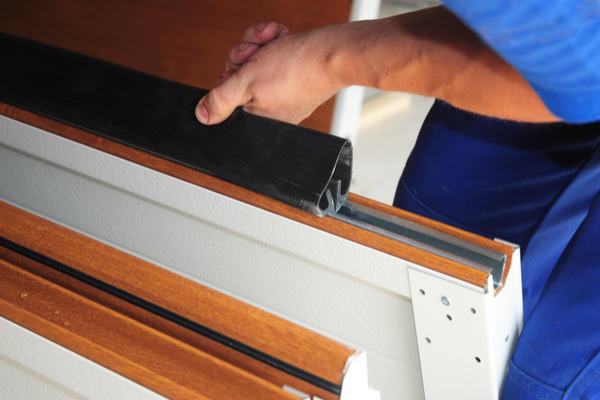
Weatherstripping is material (rubber, plastic, vinyl, tape, etc.) used to seal gaps between windows or doors and their frames. All of your home’s window and door frames probably have it, even if you don’t know it’s there. Weatherstripping compresses when the window or door closes, sealing off the gap between the moving parts and the frames. If it’s working correctly, weatherstripping completely seals the window or door when closed, leaving no gap whatsoever.

Over time, weatherstripping naturally wears away. Weather and cold beat it down, and opening and shutting doors can damage it. When weatherstripping wears out, it can no longer create a perfect seal around windows or doors. Boxelders can use openings between weatherstripping and frames to get inside. Check on the weatherstripping around your doors and windows. If it comes off easily or looks worn, replace it. Sealing your window and door frames is one of the best ways you can keep all pests out.

Seal Off Utility Lines

By utility lines, we mean plumbing pipes, gas lines, electrical wiring–any infrastructure that enters your home from outside. There are small openings all around your home where these important utility lines enter it. Unfortunately, sometimes those openings aren’t small enough. Often, pests like boxelder bugs will follow a pipe or electrical wire straight through these small gaps. From there, they could end up in the walls, the insulation, or even in your basement or attic.

It’s a good idea to know where all of your utilities enter your home. Look for plumbing, electrical, heating and cooling, and gas lines both inside and outside. If the gap between a pipe or wire and the wall looks too wide, it is. Remember: boxelders can fit through the tiniest gaps you can see. Use some heavy-duty caulk to seal up gaps around your utility lines. Rodents and other pests love following pipes inside, too, so you’ll be pest-proofing for more than just boxelders.

Garage door seal

Replace the Garage Door Seal

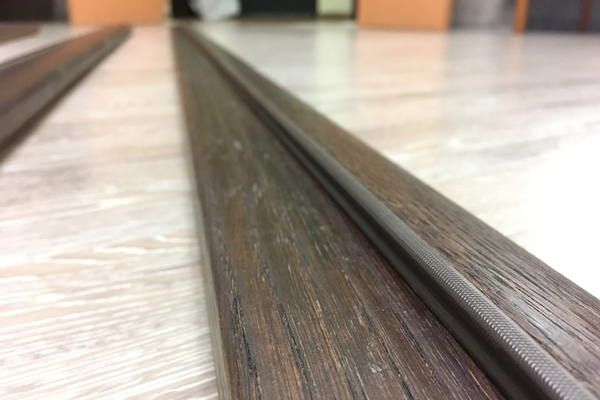
A garage door seal is basically weatherstripping for your garage door. The seals are long strips of (usually) rubber that fit across the entire underside of the door. When you close the garage door, they compress into the ground, forming a complete seal between the door and ground. There are also seals on the sides and top of most garage doors. When it’s working correctly, garage door seals prevent pests from sliding beneath the door and into your garage.

Garage door seals wear out about as quickly as other weatherstripping, and for the same reasons. Luckily, they’re also about as easy to replace. If you have your garage door’s instruction manual, look up info on the seal inside of it. If you don’t, just measure the length and width of your door. You can install garage door seals yourself, or have a professional garage door installer put it on for you.

It’s tough to keep from seeing boxelder bugs this fall. If there’s an acer tree near your property, it’s hard not to see them everywhere. Just because they’re everywhere doesn’t mean they have to be in your home, however. By performing a little maintenance like the projects listed here, you can keep boxelders out this fall and beyond.

If it turns out you need a little help keeping boxelders at bay this fall, give Griffin a call. We can make sure boxelders–or any other pests, for that matter–don’t bug you this fall.

Protecting Your Lawn From Pests

Protect your lawn from destructive pests

Summer may be coming to an end, but that doesn’t mean we get to stop worrying about our lawns just yet. In fact, fall is the most active season for many lawn-destroying pests, like box elder bugs and other beetles. The last thing you want is to have spent all summer meticulously grooming your lawn, only to see it destroyed at the finish line.

Luckily, it doesn’t have to end that way. There are a number of ways you can fight back against lawn-munching insects right up until the ground freezes. Protecting your lawn now will help ensure it comes back stronger than ever the next spring. Just follow these steps:

Mow, Trim, and Manage

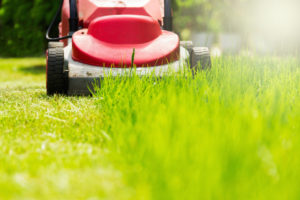
mowing your lawn will help prevent fall lawn pests

You should keep mowing your lawn in the fall right up until it turns brown and dies. Long, unkempt grass attracts pests and weeds. Bugs can eat grass and feed their larvae with its root systems. Larvae can permanently damage your lawn and potentially create ugly brown spots. If the damage is extensive enough, large sections of your lawn may not regenerate in spring.

You should mow your lawn about as often as you did in summer, until you notice the grass is no longer growing. Make sure you bag the clippings, and rake up dead grass as needed. Along with mowing, it’s important to trim bushes, ornamental shrubs, and tree branches, too. Pick up any debris that falls onto your lawn, too. Depriving pests of easy food and shelter will make your lawn far less appealing to grass-gnawing opportunists, and much healthier, too.

Pull Out Grubs

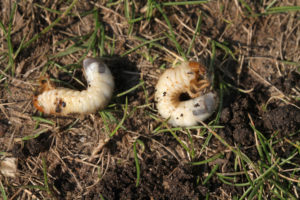
look for and pull out grubs beneath sod on your lawn

When larvae feeds on root systems for long enough, the grasses’ ability to absorb nutrients from the soil is diminished. The grass won’t get the sustenance it needs to grow, and it will wither and die. Dead grass looks crunchy and brown. Larvae can eat certain parts of your lawn and leave others untouched, creating brown spots of dead grass in an otherwise healthy yard.

If you have a brown spot, you should cut about 1 foot down into the turf at one of its edges. Roll away the area with the damaged grass and look at the dirt below. Chances are, you’ll find several beetle grubs. If you find more than 5, you’ll need to treat your grub infestation immediately. There are store products available for this task at most hardware stores and nurseries, or we could help you with it. Don’t leave the grubs in your lawn until spring.

Don’t Overwater

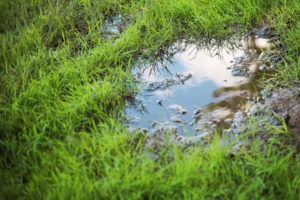
Be sure not to overwater your lawn, especially in fall

Pests of all varieties are attracted to moisture, especially if it’s easily accessible. When you water your lawn too much, the dirt and root systems can’t soak up and absorb all the moisture you’re introducing. Instead, excess water sits on the surface.

Remember: even though your lawn will keep growing in fall, it probably won’t need as much water as it did during the summer. As temperatures cool and nights grow longer, dew lasts longer and less moisture evaporates in the sun. Be careful not to overwater your plants, and ensure your lawn has proper drainage in case of heavy rains. If you notice persistent puddling or wet spots in low areas of the lawn, you should consider leveling out that part of the yard.

Weed

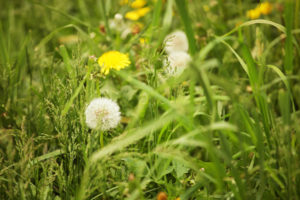
pull weeds out of your lawn to help prevent lawn pests this fall

Undesirable plants like weeds, dandelions, moss, ivy, brambles, and crabgrass don’t just choke out your grass and other plants; they attract pests too. Wild, growing weeds attract all kinds of different bugs, from gnats to flies. Wild flowers may attract wasps or bees. Weeds can provide a much-needed food source for pests during the fall. Some weeds may even attract wild animals like deer or raccoons to your yard.

You probably got used to weeding this summer, so don’t stop now! When you’re pulling weeds out of your yard, make sure you pull out the whole root system. This will ensure the weed plant doesn’t regenerate. You could also administer localized herbicide from a spray tool–but be careful not to kill any plants you want alive! Dispose of weeds in your garbage or composting. Never pull out weeds and then leave them in your yard, or you just basically made a garden salad for pests! “Garden salad”, see what we did there?


You worked hard this summer making sure your lawn stayed healthy and beautiful. Don’t let all that hard work go to waste thanks to some dumb bug. Follow these yard maintenance tips until the ground freezes, and you’ll get to enjoy a healthy and happy yard next spring.

Even if you do end up with yard pest problems–or any other kind of pest problem for that matter–don’t despair! Just call Griffin and we’ll help make sure the grass is greener on the other side.